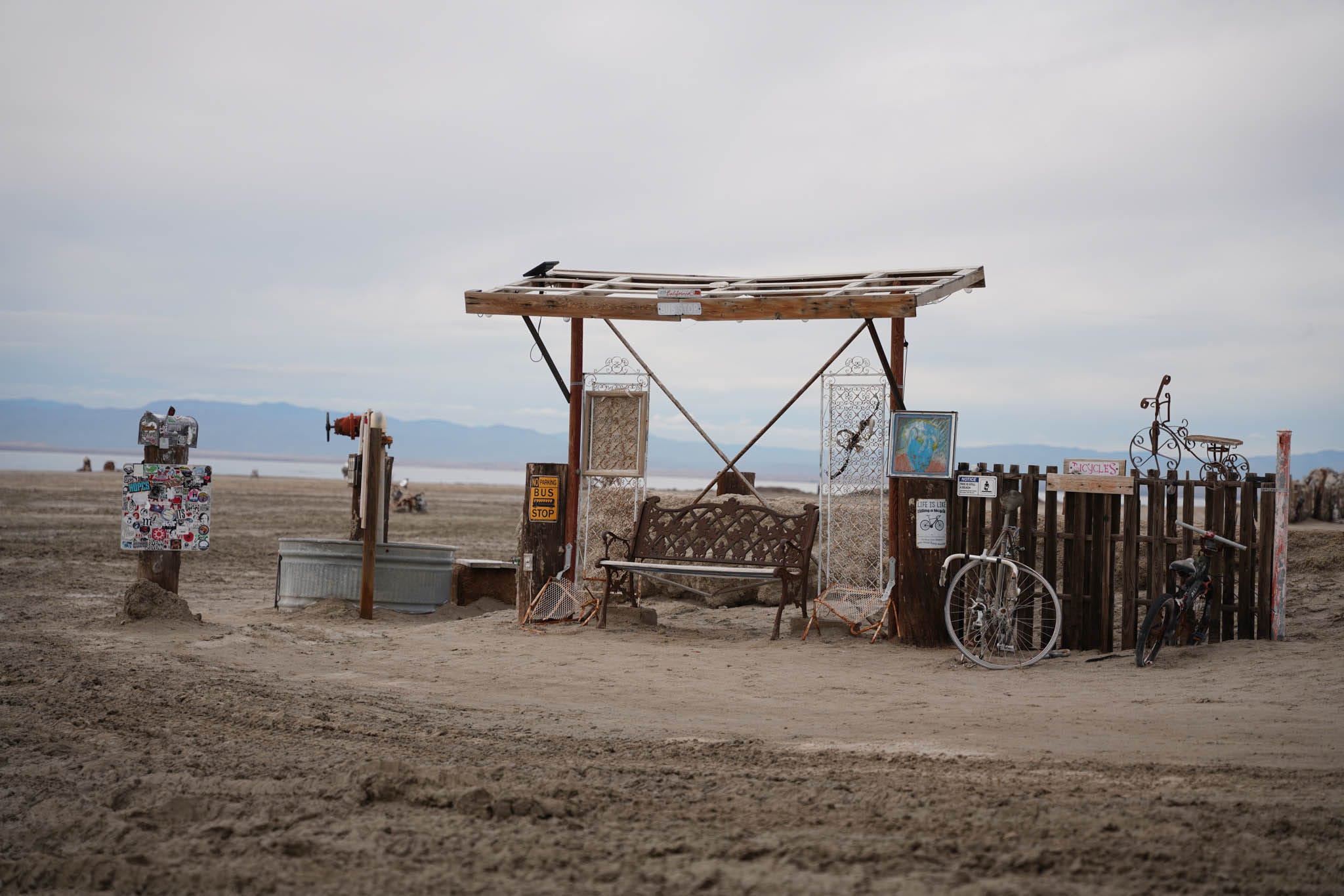
Bombay Beach
Stepping Into a Post-Apocalyptic Landscape

I met my dad to camp out at the Salton Sea State Recreation Area just after the calendar turned over to 2026. I drove two hours south, over and between our mountains, past windmill farms and date groves, watching the landscape flatten and bleach out. He rolled in with his RV, already familiar with the place in a way I wasn’t yet. I set up my Subaru beside him along the north shore, the water stretching wide and still—the kind of quiet that hums instead of settles.
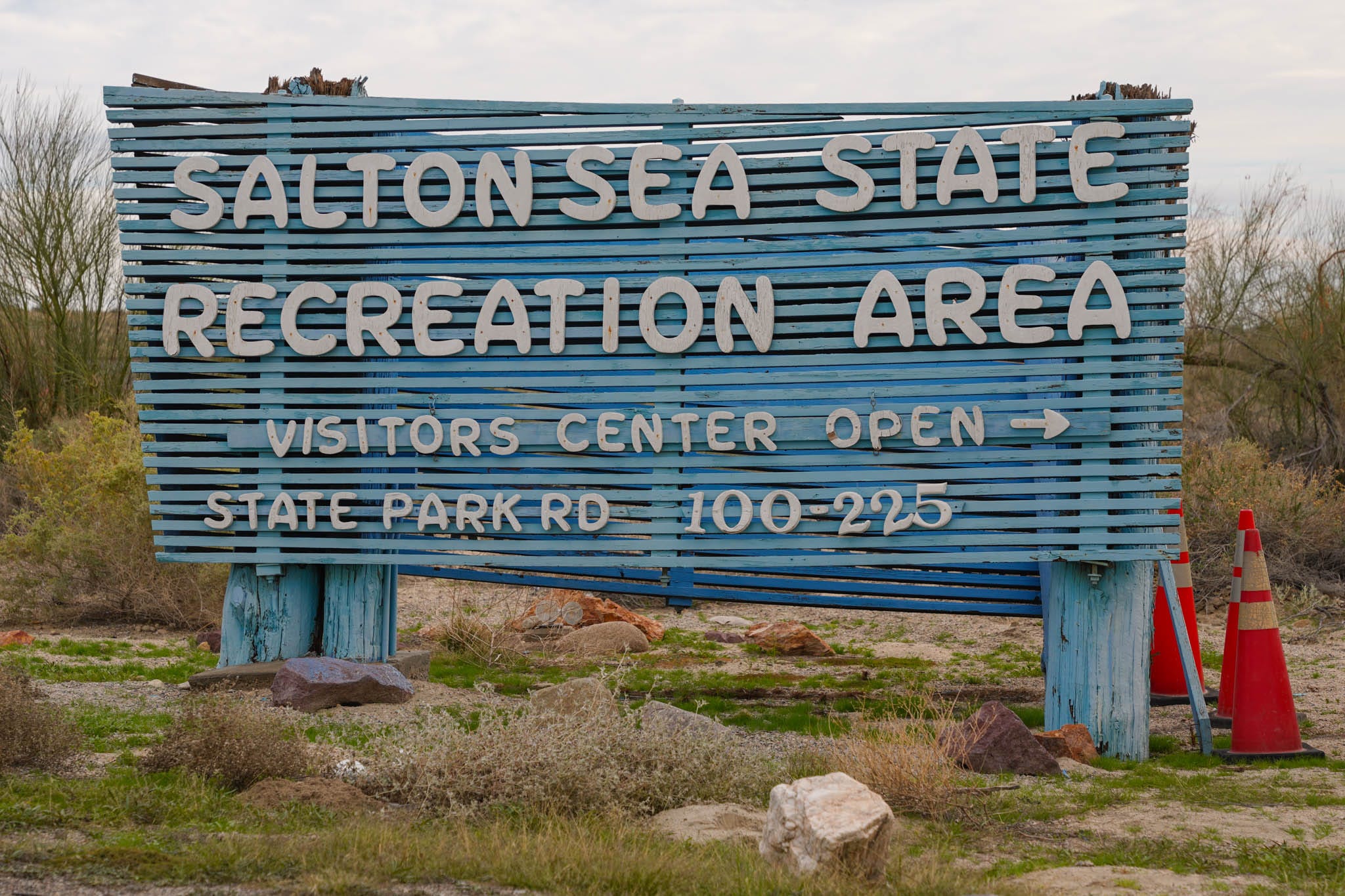
He’d been here before, there’s something special about letting someone you love show you a place they already carry inside them. He was excited to point things out, telling his stories. While there’s a lot I could write about from that weekend, this piece belongs to Bombay Beach.
Bombay Beach sits on the eastern edge of the Salton Sea, laid out in a neat square that feels almost ironic given how unruly its story is. In the 1950s, this was a booming resort town—yachts, celebrities, waterskiing, optimism. The Salton Sea was an accident back then, but a glamorous one. By the 1970s, things began to unravel: rising salinity, fish die-offs, flooding. By the 1980s, most people had left. What was once a destination became a cautionary tale.
Recently and quietly, people started coming back.
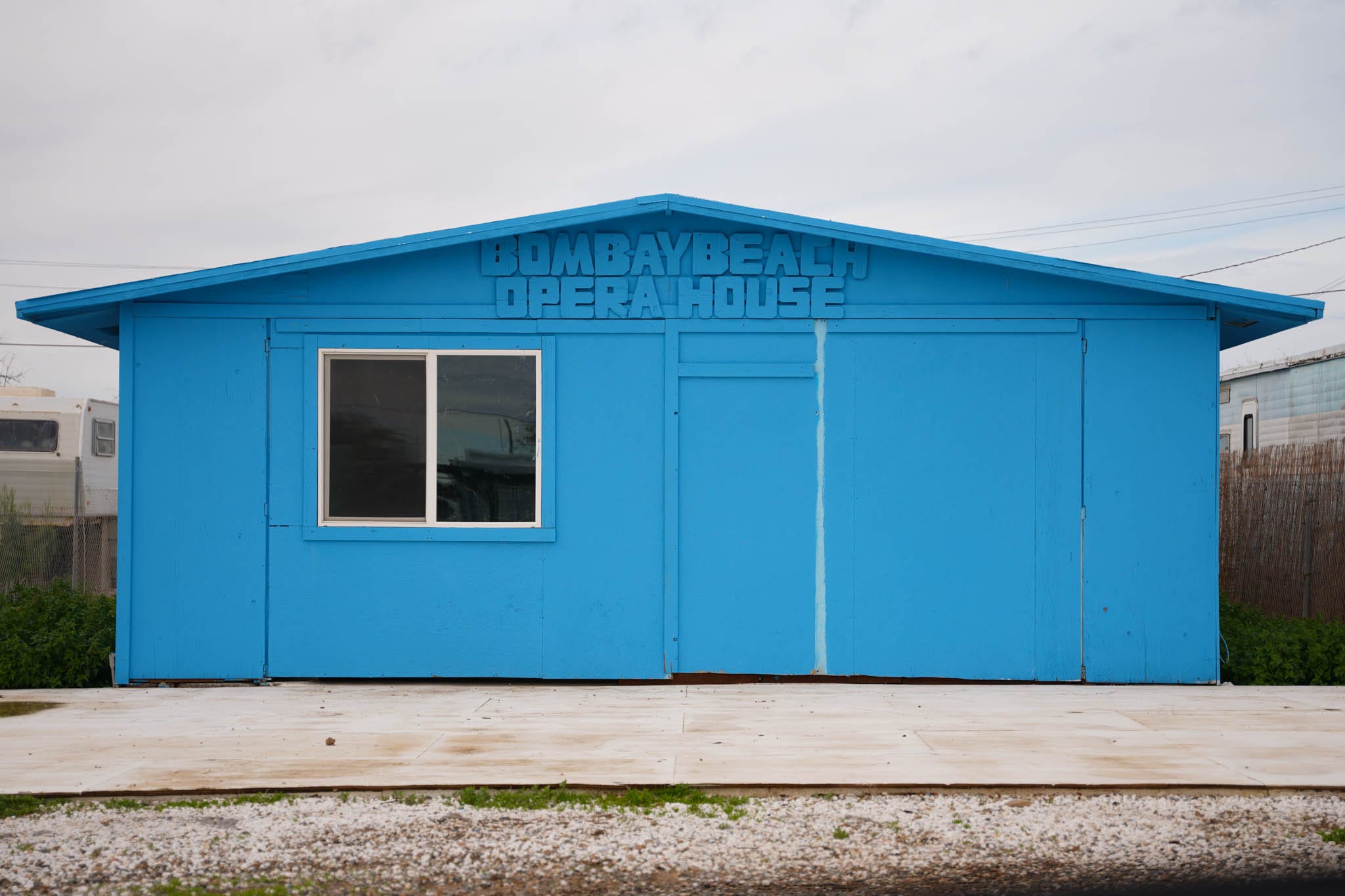
Not the people who once escaped to this now-desolate haven, but artists, makers, drifters … people who see beauty where others see decay. Today there’s an artist village, a small market, an opera house, and a fire station. The Ski Inn proudly claims the title of the lowest bar in the Northern Hemisphere, sitting 223 feet below sea level.
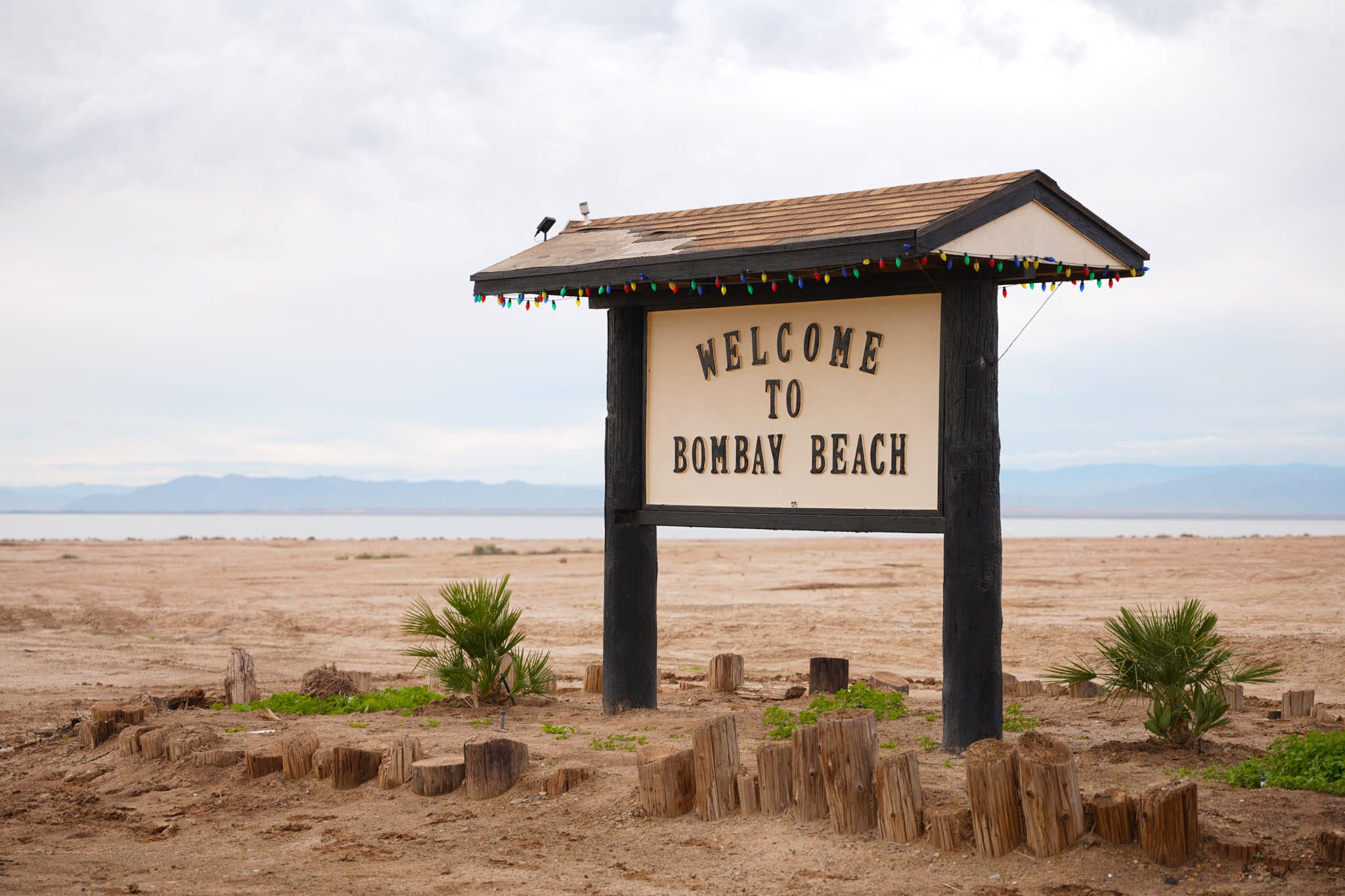
We arrived at Bombay Beach through flat desert nothingness, the ground hard and pale, the sky too big. One of the first things to welcome my dad and me was the Welcome to Bombay Beach sign … drab brown, unadorned, standing alone like it had been waiting a long time for someone to read it.
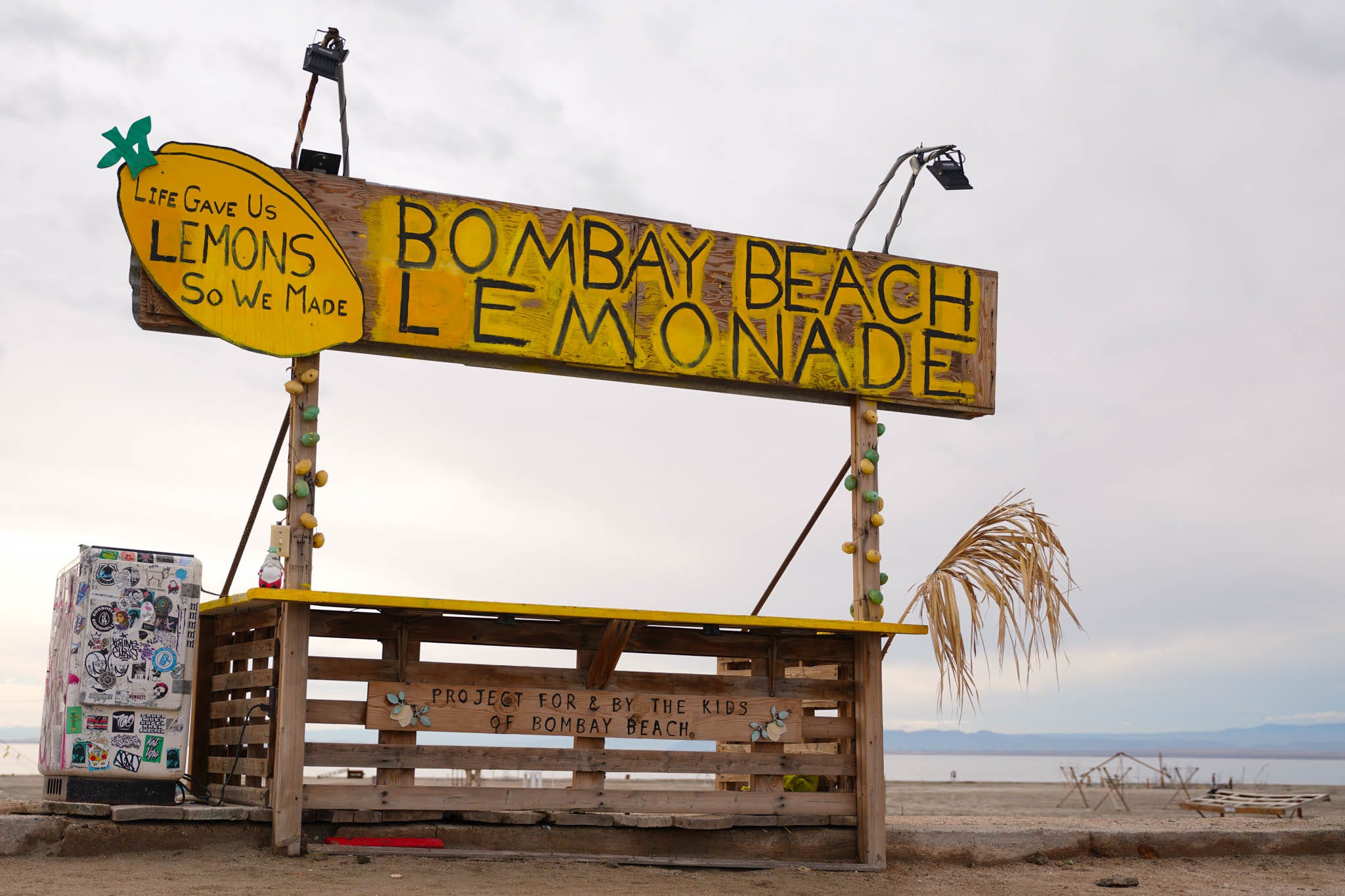
Through town, near the beach parking area, a hand-painted lemonade stand greeted visitors at the edge of the beach. It felt both earnest and surreal, like childhood dropped into a post-apocalyptic set. The beach itself was broad, the “sand” more mud than anything else on this particular winter day. It was the kind of place that asked you to look more than touch.
And there was a lot to look at.
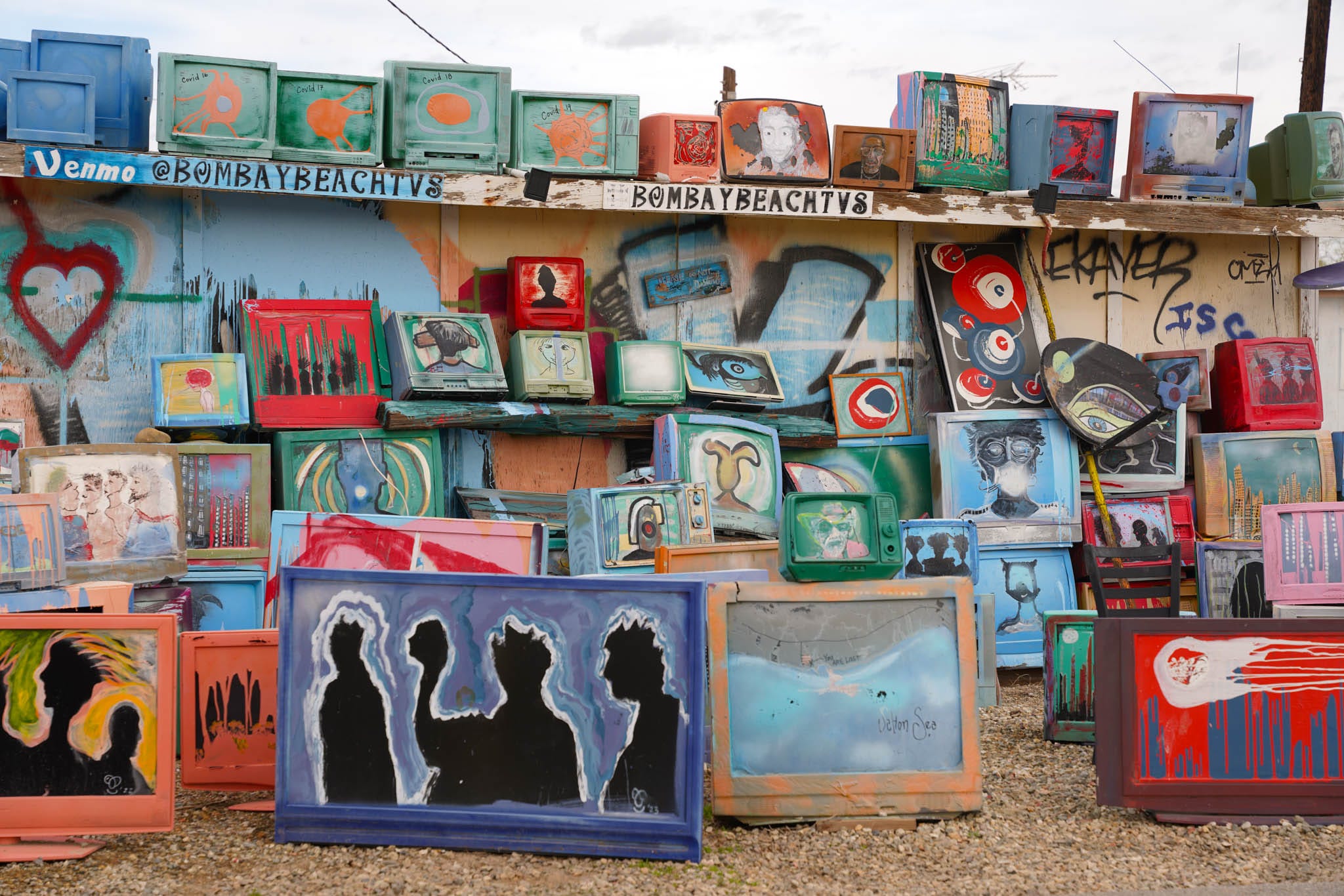
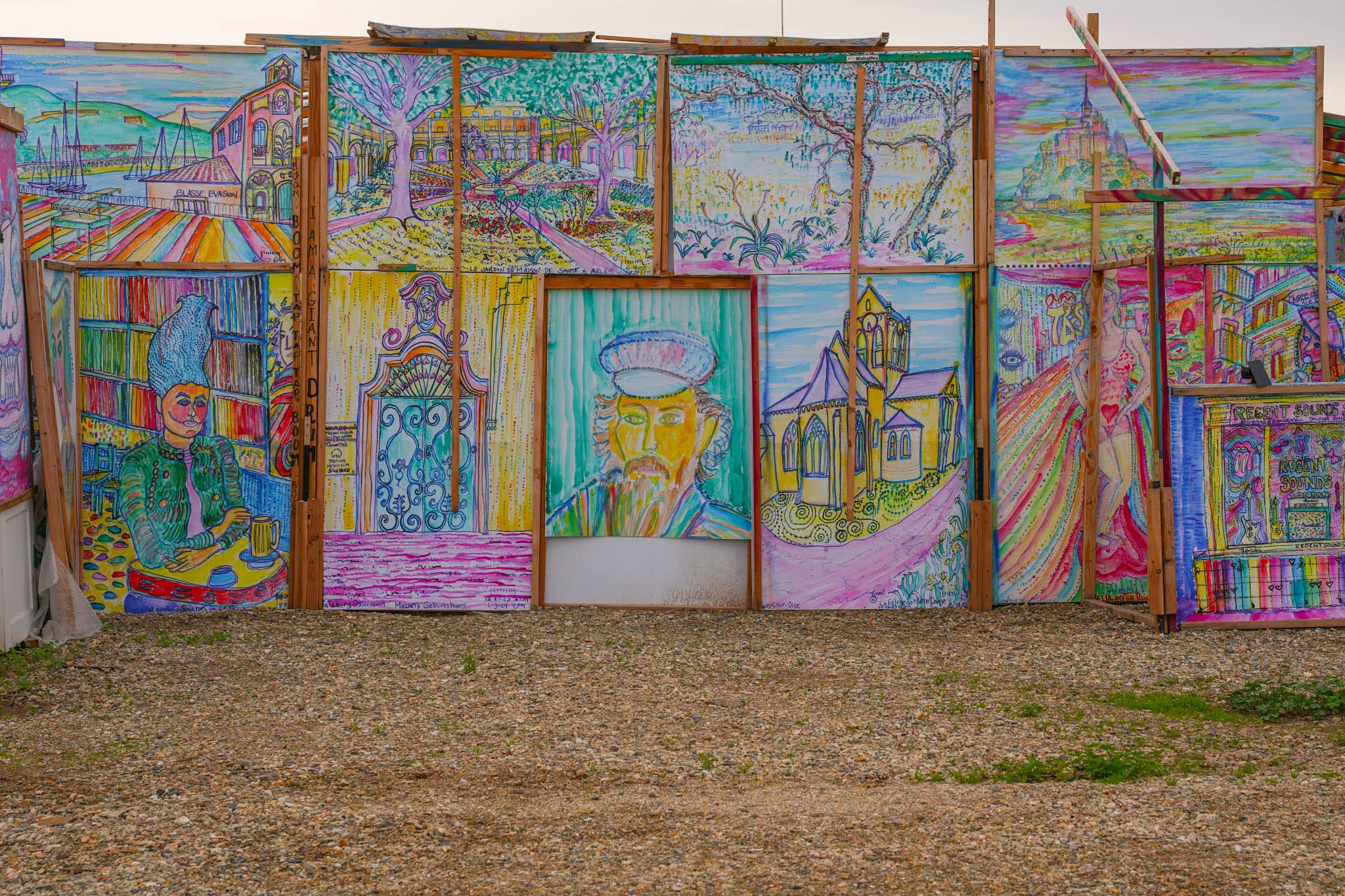
Bombay Beach was littered with art … intentional and interesting. Sculptures rose from the ground. Old televisions were stacked and scattered, each one painted and transformed, collectively forming what felt like a shrine to obsolete ways of seeing. The scene was loud with color, even though the surrounding landscape was muted and dusty. It was impossible not to think about what we choose to preserve and what we abandon.
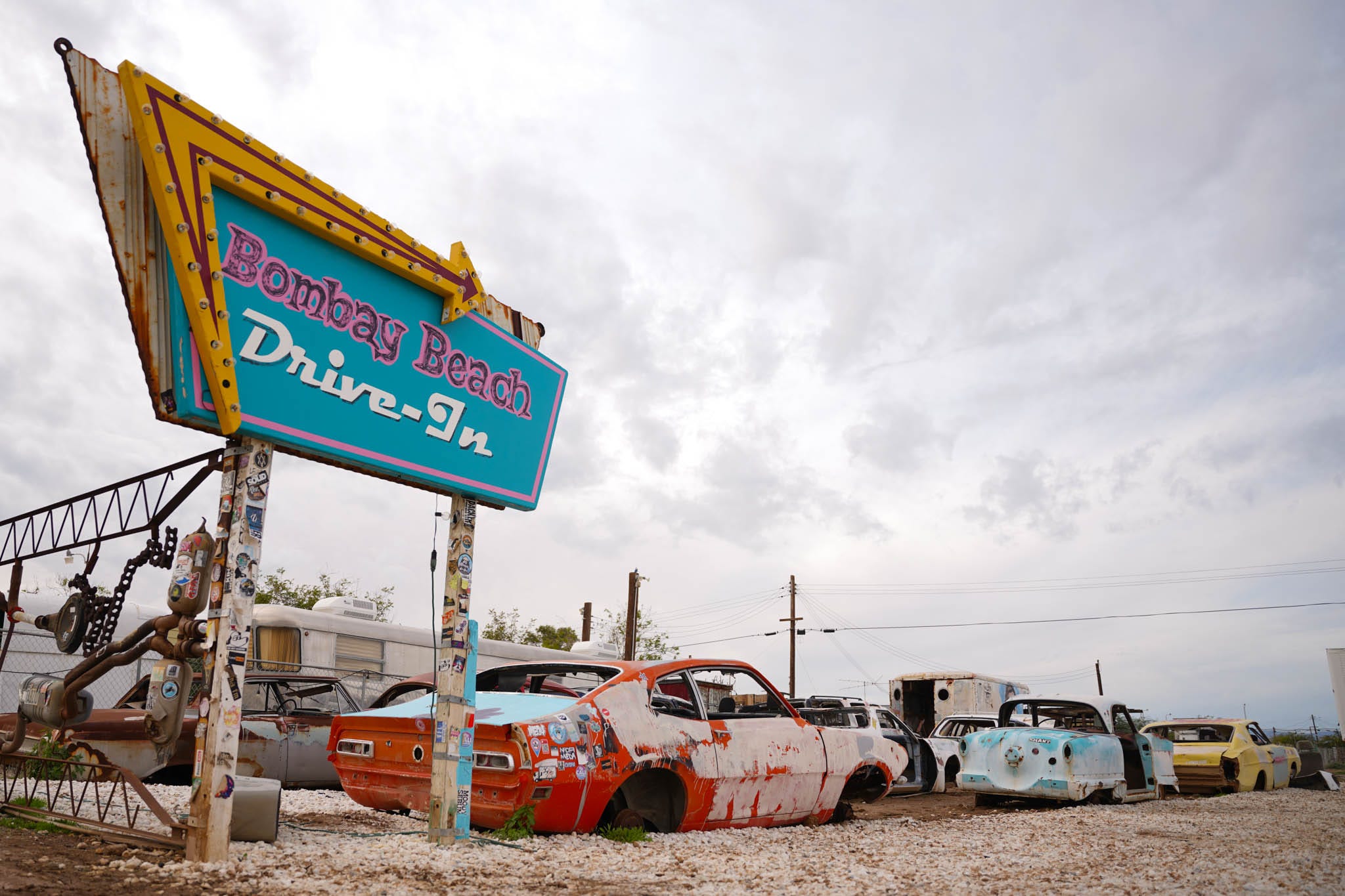
There was a remnant of a 1950s drive-in theater sign, welcoming visitors alongside rusting cars sitting like skeletons. The screen, a clean white shipping container, stood cold and uninviting.
People live here, too. Vans parked beyond reach on the sand. Homeowners proudly maintain their small pieces of desert land. It didn’t feel hidden, but it didn’t feel explained either. Bombay Beach didn’t ask you to understand it—just to witness it.
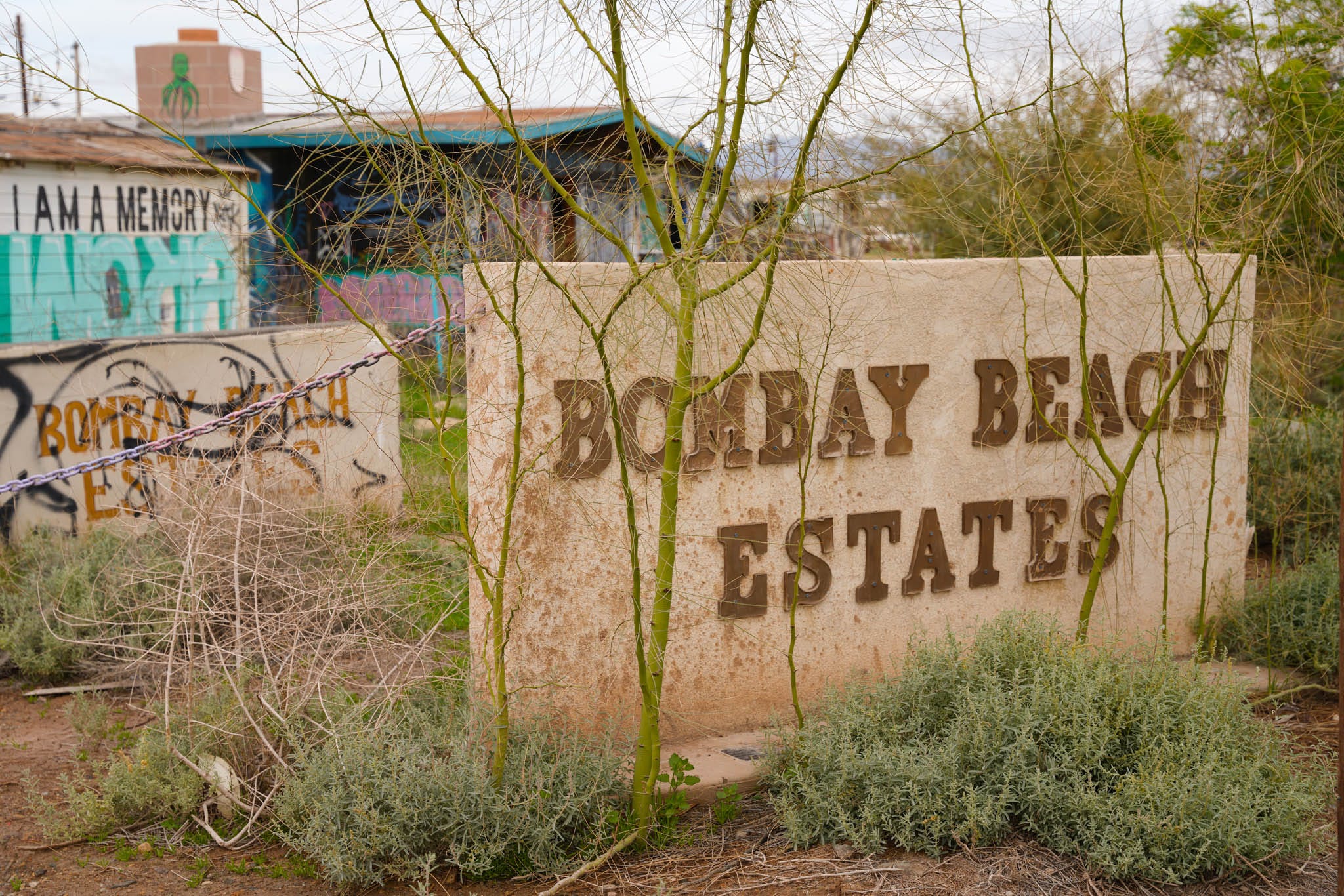
On one corner, a sign read Bombay Beach Estates. Behind it, abandoned homes and spray-painted buildings told a different story than the name promised. One wall simply read: I am a memory. Trees grew wild around it, reclaiming space without apology. It was impossible not to pause there—to feel the weight of that sentence, to wonder how many places, how many versions of ourselves, could say the same.
Walking through Bombay Beach felt like flipping through an old family photo album where some pages were missing, others had been drawn on, and a few new photos had been slipped in without dates. It wasn’t trying to be saved. It wasn’t asking to be revived. It was just there—changed, changing, and stubbornly present.
Spending time there with my dad added another layer. Two people, two generations, standing in a place shaped by time, choices, and unintended consequences. Sharing silence. Sharing stories. Sharing the simple act of being somewhere unfamiliar together.
Bombay Beach wasn’t beautiful in the way postcards promise. But it was honest. And sometimes, that’s the kind of place that stays with you the longest.